Sea Turtles
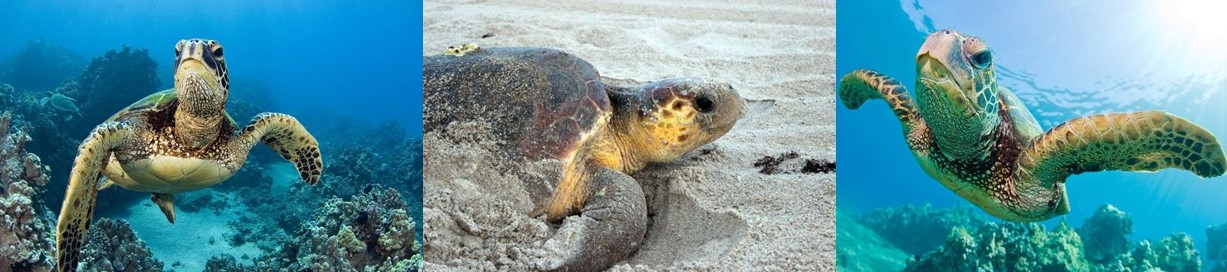
Sea turtles are marine reptiles that have been around since the time of the dinosaurs, more than 110 million years ago. Today, there are seven species of sea turtles worldwide. The five species found in Florida are protected by federal law and the Florida Marine Turtle Protection Act. Fort Lauderdale protects sea turtles by supporting efforts to conserve their nesting and in-water habitats.
Sea Turtle Nesting Season in Fort Lauderdale: March 1 to October 31
The Florida coast is the second most popular nesting area in the world for Loggerhead Turtles. Nesting season in Broward County and on Fort Lauderdale's beaches begins in early March with leatherbacks, followed by loggerheads in April and green turtles in May and June. Sea turtles can be quite unpredictable in their nesting, however, and sometimes surveyors document nests earlier or later than expected. The peak of nesting season usually falls at the end of June or beginning of July.
Sea turtle nests take approximately two months to incubate. After incubation, the hatchlings emerge from the nest and quickly make their way to the ocean. One of the strongest cues upon which hatchlings rely to find the ocean is light and they evolved to crawl toward the brightest light source. Before man-made structural development along our coastline, the brightest light source was the light reflection on the ocean; therefore, if artificial lights are illuminated near the beach hatchlings can crawl away from the water (disorientation), waste energy, and may never make it to the ocean.
More Resources
Laws, Regulations, and Ordinances
The state of Florida implemented Section 161.163, Florida Statutes, which requires the Florida Department of Environmental Protection to designate coastal areas utilized, or likely to be utilized, by sea turtles for nesting, and to establish guidelines for local government regulations that control beachfront lighting to protect hatching sea turtles.
Under this statute, the City of Fort Lauderdale regulates lighting standards for existing and new developments that may be disruptive to marine turtles. This can be found in Chapter 6 Article 3 of the City of Fort Lauderdale's Code of Ordinances.
Sea-Turtle-Friendly Lighting
By knowing what types of fixtures and bulbs to avoid, you can help to protect sea turtle hatchlings and other beach-dwelling animals such as beach mice and shorebirds. When buying fixtures and bulbs for your beachfront property, remember the three golden rules:
- Keep it low
- Keep it shielded
- Keep it long
Please note that these are only examples of lighting and these models may change and improve over time. The Florida Fish and Wildlife Conservation Commission provides a list of certified bulbs and fixtures that are safe to install near sea turtle nesting beaches. You may also connect with local vendors in the state of Florida in order to purchase sea turtle friendly lighting for your home or commercial business.
After the Deepwater Horizon Oil Spill in 2010, the National Fish and Wildlife Foundation awarded funding to several organizations to mitigate the impact of the spill in Gulf counties. The Sea Turtle Conservancy (STC) has been a recipient of this funding since 2010. The STC utilizes this funding to award grant opportunities to homeowners and businesses to retrofit their lighting to be more turtle-friendly.
Use Window Tint or Shade Screen for Sea Turtle Code Compliance
Each year at the beginning of Spring, sea turtles come ashore to nest and lay their eggs. Artificial lighting confuses the sea turtles, disorienting them and disrupting their nesting.
Lighting requirements for new construction and existing properties, with the direct line of sight to the beach, have been put into place to preserve this endangered species.
Window tint can help you comply with light transmission code requirements. It’s cost-effective and easy to install. It can also help save you on your electricity bill.
Requirements
- Tinted glass should reduce light coming from windows by 45%.
- Internal lights should not be visible from the beach
- Shade screens can be used as well
Fort Lauderdale Sea Turtle Initiatives
The City of Fort Lauderdale works diligently to map sea turtle nests, set-up protective barriers where necessary and monitor hatchlings. The City partners with Broward County to check the beach for new nests each morning. We also rake our beaches each day, capturing debris such as cigarette butts and plastic items, which can be harmful to sea turtles and all marine wildlife.
The City and various partner agencies have also formed a coalition aimed towards identifying initiatives that would balance the needs of protecting sea turtles during nesting season and the associated day to day needs of the barrier island. The goals of this coalition include:
- Minimize the safety impacts of limited lighting during turtle nesting and hatching season
- Create standard operating procedures for lighting operations within the barrier island
- Replace publicly operated lights affecting turtle nesting with FWC approved lighting fixtures
- Install new turtle friendly pedestrian lighting at intersections to improve safety
- Assess appropriate pedestrian lights to be used along west side of A1A from Bo’s Beach, located at 600 Seabreeze Boulevard, to Sunrise Blvd
- Interagency project coordination to mitigate traffic and operational impacts
- Create routine meetings with the Florida Department of Transportation and Broward County
- Coordinate with Beach Improvement District to increase project awareness
- Provide general updates on special events and other functions that may be affected during turtle lighting season
- Utilize the monthly County lighting surveys to target problematic areas and implement better lighting solutions
The map below illustrates some of the accomplishments of this coalition thus far and upcoming initiatives to be implemented in the future.
Reporting an Injured Sea Turtle
- Broward County Sea Turtle Emergency Hotline: 954-328-0580
- FWC's 24-hour Wildlife Alert Number: 1-888-404-3922
If you observe an adult sea turtle or hatchling on the beach, please adhere to the following rules and guidelines:
- Do not report crawling or nesting (digging or laying eggs) activity on the published sea turtle emergency line unless the animal is in a dangerous situation (on a road, in a parking lot, etc. or has wandered well off the beach). It is normal for sea turtles to be crawling on the beach on summer nights.
- Stay far away from crawling or nesting sea turtles. Although the urge to observe closely will be great, please resist the urge. Nesting is a critical stage in a sea turtle's life cycle. Please leave them undisturbed.
- Report all stranded (dead, injured, or sick) turtles to the Broward County Sea Turtle Emergency Hotline: 954-328-0580
- Never handle hatchling sea turtles. If you observe hatchlings wandering away from the ocean or on the beach, call the sea turtle emergency line immediately.