Swim Near a Lifeguard
 Note: Signage has been placed at unguarded areas of the public beach; the public is urged to swim at lifeguard-supervised beaches.
Swim Near a Lifeguard
In the lifeguard supervised areas of Fort Lauderdale Beach drowning is very rare.
Most drownings or water related fatalities occur in unsupervised areas that are out of the lifeguard’s zones.
Never Swim Alone
The buddy system is used by our lifeguards themselves. Bring a partner who can swim well with you in the water. Have someone on shore who can call for help in an emergency situation.
Swim Sober
Alcohol is a major factor in many drownings. It impairs swimming abilities and good judgement.
Rip Tides: Don't Fight the Current
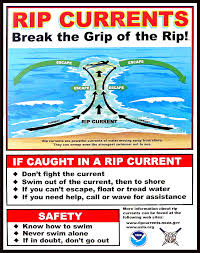 If you are caught in a rip current, don’t fight it by trying to swim to shore. Instead swim parallel with the wind. If you are unable to do so or feel tired, float. You can learn more about rip currents at United States Lifesaving Association – Rip Currents.
Don't Dive Headfirst
The tide changes constantly meaning that an area that was once deep can now be dangerously shallow. Diving headfirst into shallow water can lead to serious lifelong injuries. Go feet first until you reach a safe deep spot.
Don't Float Where You Cannot Swim
If you are not able to swim or swim well stay close to shore. Floats and flotation devices are welcome on low wind days. Children with floats, wings and/or a life jacket still need to be supervised and within arm’s reach from an adult.
Always Keep Your Children Close
Children should always be supervised by an adult and never go to the water or in the water alone. Keep children within an arm’s reach so you are able to quickly respond in any incident.
Leash Your Board
Surfboards, body boards and paddle boards should only be used with a leash. These leashes are usually attached to the board and then to your ankle or wrist. This way during falls or another situation it will keep you from being separated from your board.
Boating Safety
Lifejackets are always necessary to keep on a boat at all times. 80% of fatalities associated with boating accidents are from drowning. It can happen to anyone, but children are at the greatest danger.
Learn to Swim
Especially when visiting or living in Florida, learning to swim is the best defense against drowning. Teaching children to swim at an early age can help eliminate future dangerous situations.
At Home You Are the Lifeguard
Drowning is the leading cause of accidental death for children ages 1–2. These deaths can happen in a matter of seconds, even in the few moments it takes to answer the door or phone, text or call.
- Never leave a child alone near a pool
- Make sure there is no open access from the home and/or backyard to the pool and think about possibly getting a fence.
- If you have a pool fence already be certain that the fence is locked and secured all the way around.
Understand Beach Warning Flags
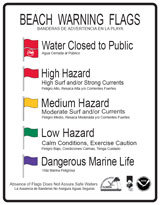
Flags posted on the beach and flying from lifeguard towers represent ocean hazards and surf conditions. Please remember that ocean conditions can change quickly. Check with the lifeguard on duty if you are unsure of safe conditions.
 Green Flag
Low hazard with the possibility of larger waves and rip currents. Exercise normal care.
 Yellow Flag
Medium hazard with moderate rip currents/surf conditions. Use extra care.
 Red Flag
High hazard. Dangerous rip currents/surf conditions. Avoid entering the water.
Double-Red Flag
Water and/or beach closed to the public.
 Purple Flag
Sea pests present (jellyfish, man-of-wars, and/or sea lice). This flag may be flown along with any of the other flags.
You can learn more about Florida's Beach Warning Flag Program at Florida DEP – Beach Warning Flag Program.
For current beach conditions, visit the beach conditions page or call the Beach Conditions Hotline anytime at 954-828-4597 (updated daily).