Bicycle Safety
City of Fort Lauderdale uses the following bicycle facilities to provide continuous, safe, and comfortable connections for people biking. Find out more information about each strategy or tool in this page.
You can also download the complete Neighborhood Traffic Calming Strategies(PDF, 5MB). If you would like this publication in an alternate format, please call (954) 828-4826 or email transportation@fortlauderdale.gov.
Cost
The general price ranges provided are simply an estimated cost for a standard project. Actual costs may vary based on the specific project, location, etc.
Key
- $: $0 - $5,000
- $$: $5,001 - $25,000
- $$$: $25,001 - $50,000
- $$$$: $50,001+
Advisory Bike Lanes
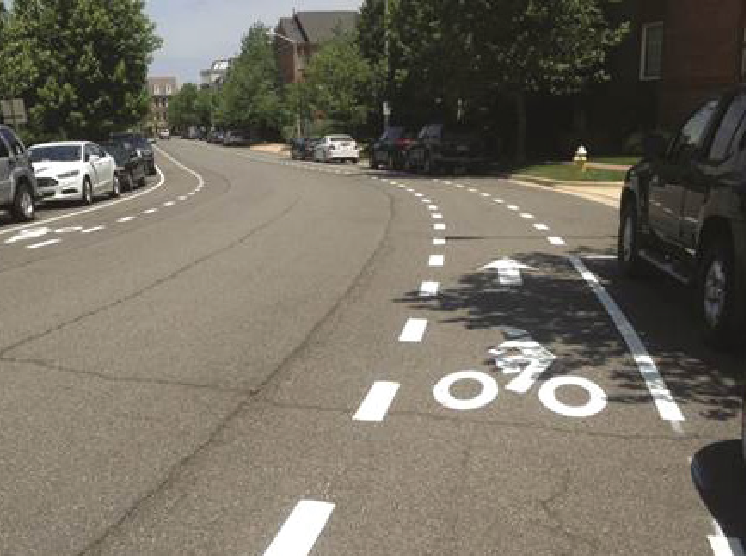 Description: Used where the width of a two-way street is too narrow for a standard bicycle lane. Most appropriate on streets with low traffic volumes
Advantages
- Provides dedicated space for bicyclists as the center lane is dedicated to, and shared by, motorists traveling in both directions
Disadvantages
- No vertical separation provided allowing cars to easily encroach into bicycle lane
- Potential conflict points with right turning traffic
- Lack of driver awareness and education
Cost: $$ - $$$$ (varies on length of project)
Threshold
- Local streets
- Posted speed limit of 25 mph or lower
- Less than 5,000 vehicles per day
Community Support: Impacted street and HOA
Bicycle Boulevard
 Description: Low volume, low speed local streets where bicyclists are given priority. Traffic striping, signage and traffic diverters may be used to create safer place for bicyclists
Advantages
- Discourages through automobile movements using traffic diverters and other traffic calming mechanisms
Disadvantages
- Only for use on roadways with a low traffic volume
Cost: $$ - $$$$ (varies on length of project)
Threshold
- Local streets
- Posted speed limit of 25 mph or lower
- Less than 1,500 vehicles per day
Community Support: HOA
Bicycle Lanes
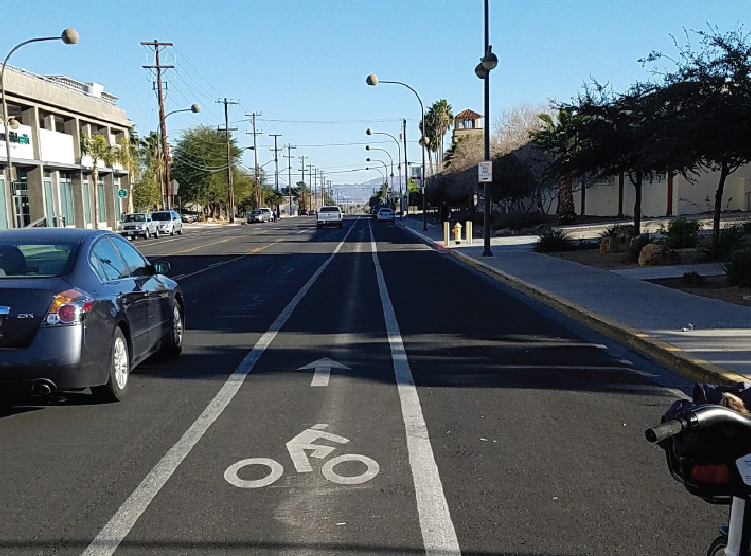 Description: Dedicated lanes for bicycles adjacent to vehicular travel lanes. Bike lanes are typically on the right side of the street
Advantages
- Improved visibility for both bicyclists and motorists by providing dedicated space for bicycle traffic
Disadvantages
- No vertical separation provided allowing cars to easily encroach into bicycle lane.
- Potential conflict points with right turning traffic
Cost: $$ - $$$$ (varies on length of project)
Threshold
- All roadway classifications except for local streets. Width should be a minimum of 5'
Community Support: HOA
Bike Boxes

Description: Designated area at the front of intersection providing bicyclists a more visible way to advance in front of queuing traffic during red signal phase
Advantages
- Increases visibility of bicyclists
- Facilitates bicyclist left turn positioning at intersections
- Helps prevent ‘right-hook’ conflicts with turning motorists
Disadvantages
- Lack of driver awareness and education about facility
Cost: $
Threshold
- Roadway classifications of minor collector and above
Community Support: HOA
Buffered Bike Lanes
 Description: Bicycle lanes separated from the travel lane using a 2’ or greater buffer
Advantages
- Increased separation between moving vehicles and cyclists
- Improved safety for cyclists
Disadvantages
- No vertical separation provided allowing cars to easily encroach into bicycle lane
- Potential conflict points with right turning traffic
Cost: $$ - $$$$ (varies on length of project)
Threshold
- All roadway classifications except for local streets
Community Support: HOA
Contraflow Bike Lane
 Description: Provides bicyclists dedicated space to ride by converting one-way traffic into two-way street: one lane for motorists and one lane for bicyclists
Advantages
- Provides increased connectivity and safer solution to wrong-way riding by dedicating space to ride in the opposite direction of motorized traffic
Disadvantages
- Introduces additional conflict points as motorists may not expect on-coming bicyclists at intersections
Cost: $$ - $$$$ (varies on length of project)
Threshold
- Roadway classifications of collector and lower
Community Support: Impacted street and HOA
Separated Bike Lane (cycle track)
 Description: Bicycle lanes separated from the travel lane using vertical elements, such as parked cars, bollards, flexible delineators, potted plants, etc. May include bi-directional bicycle traffic
Advantages
- Vertical separation from moving vehicles
- Improved comfort for cyclists due to increased separation
Disadvantages
- Requires more space than a traditional bike lane
- May experience sightline issues if bi-directional
Cost: $$ - $$$$ (varies on length of project)
Threshold
- All roadway classifications except for local streets
Community Support: Impacted street and HOA
Sharrows (shared lane markings)
 Description: Road markings used to indicate a shared lane environment for bicycles and automobiles
Advantages
- Improves cyclists positioning in the roadway
- Informs motorists of presence of bicyclists
Disadvantages
- Not as safe as bicycle lanes
- Lack of driver awareness and education on sharrows
Cost: $$ - $$$ (varies on length of project)
Threshold
- Local streets
- Posted speed limit of 25 mph or lower
- Less than 3,000 vehicles per day
Community Support: HOA
Sidepath
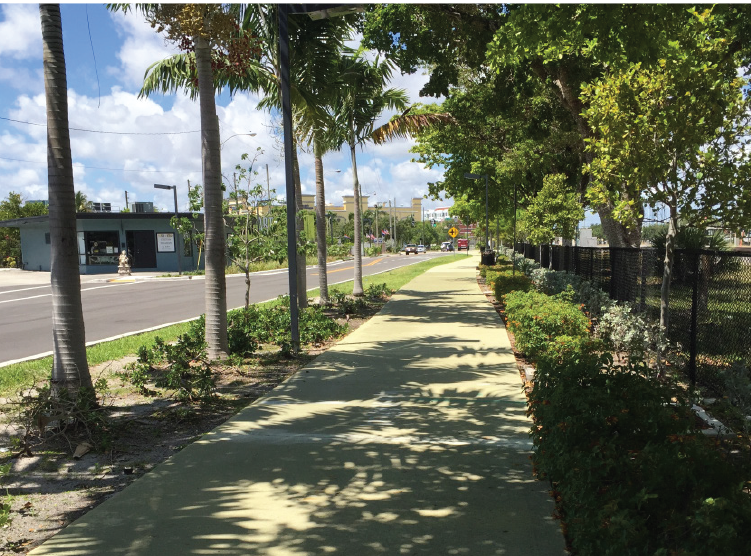 Description: Path marked for bicycle use that is adjacent to a roadway with a small or no buffer.
Advantages
- Increased separation between bicyclists and motorists
Disadvantages
- High cost of implementation related to right-of-way acquisition and maintenance
- May require additional improvements at intersections for increased safety
Cost: $$ - $$$$ (varies on length of project)
Threshold
- Right-of-way acquisition may be required
Community Support: Impacted street and HOA
Trail (shared-use path)
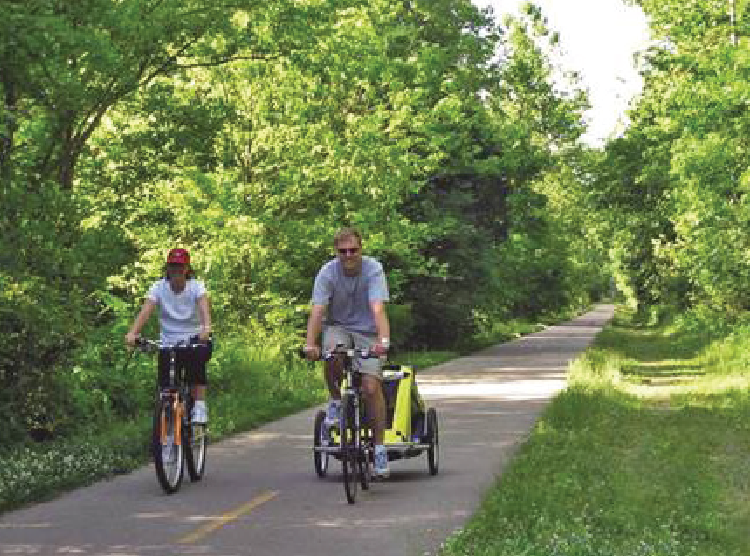 Description: Physically separated space outside roadway that permits bicycle and pedestrian use
Advantages
- Physically separated from motor vehicular traffic with an open space or barrier
- Provides most comfort and safety for bicyclist and pedestrians
Disadvantages
- High cost of implementation related to right-of-way acquisition and maintenance.
Cost: $$ - $$$$ (varies on length of project)
Threshold
- Right-of-way acquisition may be required
Community Support: HOA