Northwest Gardens III Community Food Forest
The Sustainability and Special Projects Division, in collaboration with the Housing and Community Development Division, planted a community food forest at Northwest Gardens III, a property owned by the Housing Authority of Fort Lauderdale (824 NW 14th Ave, Fort Lauderdale, FL 33311). This project was initiated to provide access to fresh food to the residents of Northwest Gardens III.
The Northwest Gardens III food forest includes more than 270 plants of 39 species of edible and useful plants selected for South Florida's growing conditions. As the plants grow and become established, the food forest will provide fresh food, shade, habitat for wildlife, opportunities to learn, and a space for residents to spend time outdoors and connect with neighbors.
The Northwest Gardens III food forest was planted in 20 groupings called guilds—small groups of plants designed to grow together around a central tree or larger plant. Each guild combines different plant types and layers that can help make better use of space, protect and improve soil, support pollinators, and create a more resilient, lower-maintenance landscape over time.
This project was made possible with funding awarded by the Community Services Board from the City of Fort Lauderdale's Community Development Block Grant from the U.S. Department of Housing and Urban Development and the City of Fort Lauderdale's Tree Canopy Trust Fund.
Explore the Plants
Explore some examples of the plants growing in Northwest Gardens III.
Breadfruit
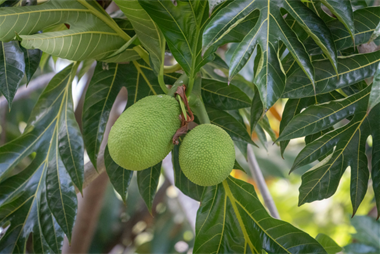
Breadfruit (Artocarpus altilis) is a tropical tree that produces a large fruit that can be prepared and eaten similar to potatoes. Breadfruit can be used at all stages of development and prepared in many ways. When it is green, it is firm and has a grassy, artichoke-like flavor. Once it ripens, it tastes like a Yukon Gold potato. When it is overripe, the starches turn to sugar, and it makes the flesh sweeter like a dessert or custard.
Mamey Sapote

Mamey Sapote (Pouteria sapota) is a large tropical fruit with brown skin and orange-red flesh. It has a sweet and rich flavor similar to sweet potato, pumpkin, and brown sugar. It is creamy, dense, and smooth. Eat the flesh fresh or blend it into smoothies or milkshakes. It can also be used in ice cream and other desserts.
Roselle
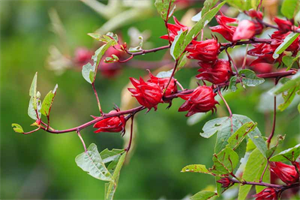
Roselle (Hibiscus sabdariffa) is a hibiscus plant. The red part around the seed pod is the part most often used. It has a tart flavor and the leaves are edible too. Use it to make tea, drinks, jams, and sauces. Young leaves can also be used in salads or cooked with other greens. Roselle is also called Jamaican sorrel and is widely used in Caribbean drinks.
Sweet Potato

Sweet potato (Ipomea batatas) is a spreading vine with edible roots and leaves. Sweet potatoes grow underground. After the vines have grown for several months, dig carefully in the soil to find full-sized sweet potatoes. they can be baked, roasted, boiled, steamed, or mashed. Use them in soups, stews, side dishes, and other foods. The young leaves can be cooked and eaten like other leafy greens.
Help Care for the Food Forest
Residents and community members can help keep the food forest healthy as it grows.
Tips for Watering
-
Check the soil before watering. If it feels dry a few inches below the surface, the plants may need water.
-
Water slowly and deeply around the base of each plant during establishment period.
-
Give newly planted trees, shrubs, herbs, and vegetables extra attention until their roots become established.
-
Once plants are established, hand-watering should also include the spaces between plants to encourage roots to grow beyond their original shape and share space with companion plantings.
Tips for Harvesting
-
Do not eat anything you cannot confidently identify.
-
Harvest only food that is ripe and ready to be used.
-
As a courtesy to your neighbors, for each fruit or leaf taken, try to leave two for the next person.
-
Avoid pulling or damaging branches.
-
Pick fruits, berries, herbs, and vegetables gently to avoid causing permanent damage to the plant or tree.
Tips for Plant Care, Weeding, and Mulching
-
Check plants for damaged branches, discolored leaves, insects, or signs of disease.
-
Remove dead leaves and small damaged stems using clean tools.
-
Do not prune large branches or apply fertilizers, pesticides, or other treatments.
-
Pull weeds before they flower or produce seeds.
-
Leave a layer of mulch around trees and shrubs to retain moisture and protect the soil.
-
Keep mulch a few inches away from trunks and plant stems.
Tips for Community Stewardship
-
Clean shared tools after use.
-
Return tools to their designated storage area.
-
Keep pathways clear.
-
Supervise children and use caution when working with garden tools.
-
Respect plants, wildlife, volunteers, and other visitors.
-
Share what you learn and help new volunteers understand how to care for the food forest.
Community Food Forest Image Gallery
Interested in helping maintain or learning more about the Northwest Gardens III food forest?
Email us at sustainability@fortlauderdale.gov to learn about the project and volunteer opportunities.